The medical profession should stay out of euthanasia and assisted-suicide to prevent tragic consequences for the profession.
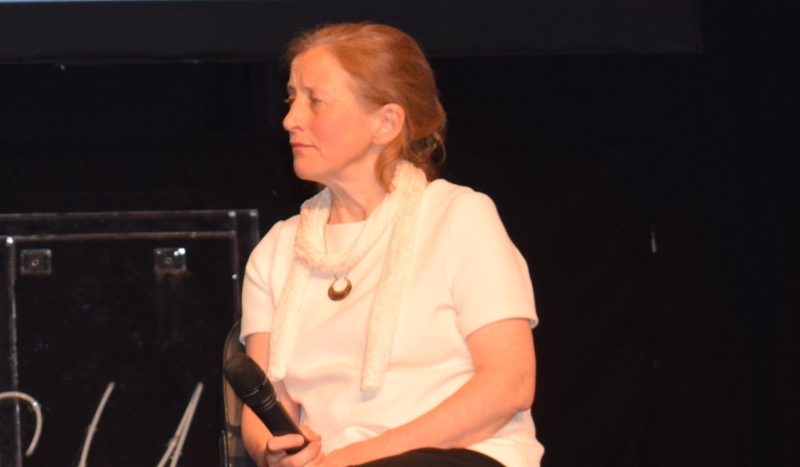
Wellington specialist in Palliative Medicine Dr Sinead Donnelly spoke passionately against euthanasia at the Forum on the Family on July 7 in Manukau.
“Leave doctors out. There’s no reason for them to be a part of it. It will ruin in my view the profession of medicine. Trust is everything,” she said.
“The goal of medicine is not to give up caring.” She said many people confuse euthanasia with the appropriate withdrawal of treatment for a dying person. “
We as doctors recognise the clear distinction between that and a doctor intentionally ending the life of a patient,” she said.
Dr Donnelly said the World Health Organisation defines palliative care as providing “relief from pain and other distressing symptoms; affirms life and regards dying as a normal process; but intends neither to hasten nor postpone death”.
“In my experience, no patient has consistently requested that I, as their doctor, end their lives. But patients do say, ‘This is hard. I wish it was over.’ That’s not uncommon,” she said.
The response as a palliative care team is to explore all aspects of that statement gently and carefully with the patient.
“We see that statement as an invitation to ask more, listen more, to be present and to explore who is this person who is suffering. And after so many years of experience, we know that such an approach works,” she said.
“The greatest need, in my experience, is to be truly heard, truly listened to, not
abandoned physically or emotionally,” she added.
She cited an elderly patient who attempted suicide because she was constantly falling and getting fractures and feared being “condemned” to a rest home. The palliative care team discovered that it was her medication patch that was causing her recurrent falling.
With good palliative care, the patient blossomed, she said.
“My concern is that people such as this lady are vulnerable and are seriously at risk of poor care and in the presence of euthanasia will be seriously at risk of being killed,” Dr Donnelly said.
Dr Donnelly also cited the studies done by international expert on Palliative Care Dr Harvey Max Chochinov, who is also a leading researcher on dying with dignity. Dr Chochinov, she said, found terms like pride, self-respect, quality of life, well-being, hope and self-esteem all overlap with the term “dignity”.
She said Dr Chochinov explained that most of these terms refer to “internal states of mind”, but dignity also has an external component “based on the perception of one’s worthiness of honour and esteem from others”.
“This is important in the debate around euthanasia because those in favour of euthanasia present the intention of killing as a way to preserve dignity. It’s much more complex than that,” she said.
Dr Donnelly said she feels that talk around euthanasia is not really delving into the deep issues surrounding dying.
“What we should be really talking about is our understanding of suffering, our understanding of caring, our response to uncertainty and how we deal with it in our society and basically our fear,” she said.

Thank you, Dr, Donnelly for explaining the situation so well.
Allow me to add that there is no ‘right to die’. International human rights law forbids arbitrary deprivation of life.
Facilitation of medicalized killing or self-harm in response to suicidal ideation is in violation of the fundamental human rights principle of inalienability. Human beings cannot be deprived of the substance of their rights, not in any circumstances, not even at their own request.
Human rights are applicable to the living. For as long as the terminally ill are alive, each life is to be protected by law against medicalized killing or self-harm.
Even at the request of the suicidally distressed, proactive medicalized killing is always a bridge too far. Once the medical profession crosses that Rubicon, the most vulnerable amongst us, the very old, the very disabled, the most burdensome and those without a voice must fear for their lives. To remain alive they will need to furnish adequate rational justification for ‘choosing’ to remain alive. And it then damages the original, irreplaceable universal agreement that to be alive requires no justification–that it is sufficient simply that one is alive.
The dying patient’s basic human right to faithful, unstinting care must not be watered down to a mere ‘choice’. In this substitution of a choice for a human right, the euthanasia enthusiasts will cheat us all of something that for centuries we had been able to take for granted–the right not to be pressured to hasten our own death—to live our lives to the natural end.
Regrettably, many profess a touching faith in the unimpeachable ethics of the medical profession to whom they will entrust their termination.
Having researched many years ago the history of the medical profession in Germany 1933-45, I remain a confirmed sceptic when it comes to entrusting to doctors even a strictly limited legal power to perform medicalized killing.
It is imperative that the medical profession continues to improve palliative care. Medical research and health care resources must not be diverted into ktenology (the science of killing).