
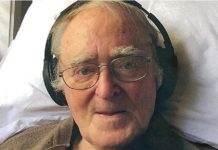
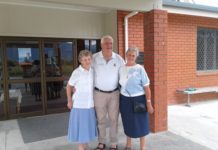




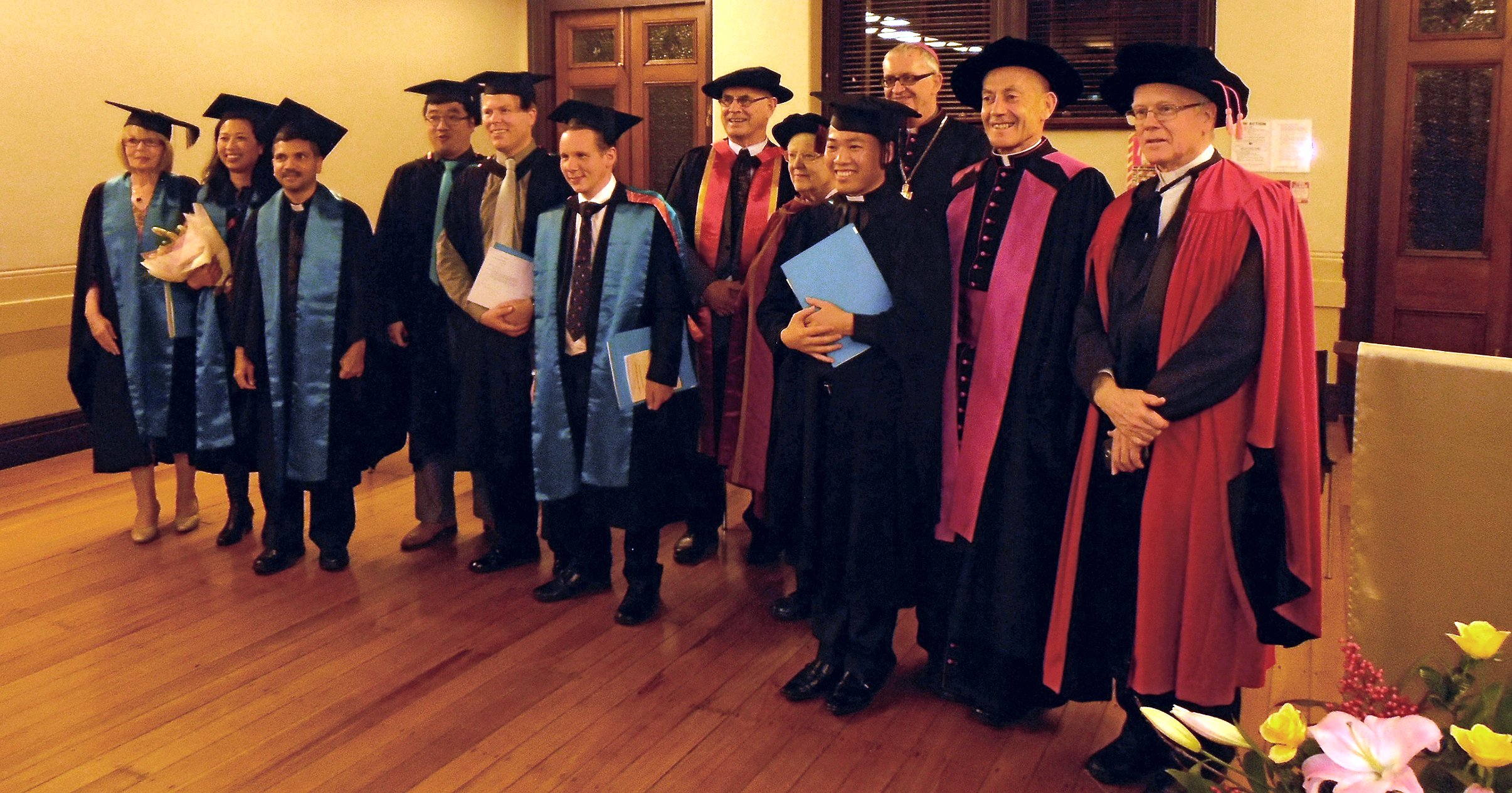
An Auckland Computer Science academic says he is at a loss to understand what many see as the modern dichotomy between science and religion. Dr Robert Sheehan, from the University of Auckland’s Department of Computer Science, spoke at the Good Shepherd College graduation ceremony in Ponsonby on June 10.
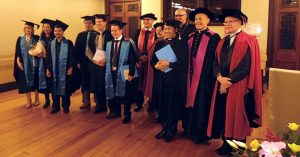
graduation ceremony.
Dr Sheehan harked back to his boyhood enjoyment of hearing of and reading about the Apollo missions and lunar landings in the 1960s, a time of hope and optimism.
This was during an era when, he said, there was no perception by the world that science and
religion were opposed to each other.
In fact, many of the Apollo astronauts were Christians. Dr Sheehan pointed to Buzz Aldrin, a
Presbyterian, receiving communion on the Moon, and to the famous reading of the first chapter of Genesis on the Apollo 8 mission.
Dr Sheehan recounted an experiment that he performed, in order to illustrate modern perceptions on science and religion.
He Googled four phrases and assessed the number of results.
They were “Science is opposed to religion” (31,600 results); “Science is not opposed to religion” (14,000 results); “Religion is opposed to science.” (12,100 results); “Religion is not opposed to science” (9 results).
“We have a lot of work ahead of us,” he noted.
Dr Sheehan, a Catholic, said he could attempt to give reasons for the growth of atheism.
“But none of the reasons I can think of are the ones given by the new atheists [such as Sam Harris, Richard Dawkins, Daniel Dennett, and the late Christopher Hitchens],” he said.
“There has been no scientific breakthrough since the 1960s which proves God does not exist.
“In fact, the understandings of biology, cosmology and psychology which we currently believe as scientists and people of reason have been refined in the last 50 years — but [they are] substantially the same.
“What has changed is the current world view of those in the developed world; for a legion of reasons we have decided that we don’t need God to make sense of our world, our lives.”
This is at the same time we are pushed to see life in terms of its economic value, he added.
Dr Sheehan said our culture “has become one of quick fixes and short term decisions”.
“Having a qualification in theology,” he said, “says there are more important things.
“The principal goal of a theology qualification is to meet Jesus more keenly.”
During his speech, Dr Sheehan paid tribute to his old teacher, Br Bede Fitton, who helped inspire him in his pursuit of science.
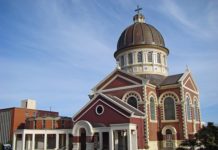
This was when Dr Sheehan was a pupil at Marist Brothers Vermont St, the site of the modern St Columba Centre, where the GSC graduation was held.
Dr Sheehan also referred to giants of literature and science during his speech — including Blaise Pascal, C. S. Lewis, W. H. Auden, J. R. R. Tolkein, Yan Martel and Thomas Hardy — while developing a theme of “the better story”.
Speaking to those who had received new qualifications in theology, he said they would face a continual challenge in aligning their theological knowledge with the world of the 21st century and using it to guide their dealings with that world.
But having people with such qualifications do just this is needed “to show the rest of us the full picture of existence”.



The battle between science and religion is fight between two dimwits in an ivory tower!!! They both pray to the god chronos with devote prayers and supplication. The religious “we believe” in the all mighty chronos creator of the cosmos, while the faithless “theorize” Chrono’s is eternal and chronos laws dictate the cosmos. Which chronos is true? the personal loving chronos or the dead impersonal chronos? CULTure is a funny thing it has no Kairos. it knows it not.
Whether science and religion remain in their uneasy status quo remains to be seen. But what could very well knock that tenuous balance to oblivion is a change in the existing faith paradigm, from the one handed down by tradition, to one conforming to the scrutiny of what is called the scientific method. In plain language, a testable proof of God to be realized by faith! Ironically what both science and religion agree should not be possible. But there is nothing in the scriptural record to contradict such an idea and much to support it, particularly in non canonical texts. Theology may very well come to regret borrowing its ‘logic’ from Greek philosophy!