

by JUDITH DOYLE
Francisco, as the Pope is in Spanish speaking Argentina, greets us straight away — in photos and print on a large poster — when we enter the Metropolitan Cathedral in Buenos Aires.
This imposing building, looking more like a Greek temple than a cathedral, was the home church for Jorge Mario Bergoglio when he was archbishop of Buenos Aires; later cardinal and then, of course, Pope Francis. He said Mass here for 15 years; living in a simple apartment in the diocese offices next door to the cathedral, leaving the plush Archbishop’s Palace for others.
I peer through the palings into the leafy garden that lies between his old apartment and the cathedral. It’s a small shady spot lit up by a wonderful statue of Mary. When archbishop, he
would walk across the Plaza de Mayo and get the morning paper each day, our guide, Paola, tells us. He must have walked by the simple white head dresses painted on the pavement where the
mothers and grandmothers marched to publicise the “Disappeared” of the Dirty War (1976-83). He would have seen the demonstrations that gathered on the square, perhaps workers seeking
higher salaries or maybe Falklands’ War veterans protesting about pensions.
For this plaza is a veritable axis for all things political. It’s where it all happens. In the hours that led up to his elevation as Pope, a large TV screen in the square relayed the unfolding news, Paola says.
“Hundreds of people gathered here. On the ‘Pope tour’ in Francisco’s home town Everyone waiting for the news. There was so much excitement.”
It wasn’t long before Pope tours were organised in Buenos Aires — walking and bus tours. Their main focus is the vast Metropolitan Cathedral, his “home church” as archbishop. It has
been rebuilt several times since its humble origins in the 16th century.
Grand columns flank both sides, and there’s an arched decorated ceiling. It houses the tomb of South American independence hero José de San Martin.
Tours also visit St Francis of Assisi Basilica and St Ignatius of Loyola, where Pope Francis used to hear confessions — as a Jesuit, he’d have understood the importance of St Francis
of Assisi in the life of St Ignatius of Loyola, founder of the Society of Jesus.
Other tours, one walking, others by bus, visit the district of Flores where Pope Francis spent his early years. The family house at 531 Membrillar has gone and been replaced by another
house. You can see the streets where he played soccer, and the church, San José de Flores, where he worshipped as a teenager.
Tours may also visit the seminary in the district of Villa Devoto where he decided to become a Jesuit priest, and pass by the Jesuit College of El Salvador where he taught literature
and psychology, and the Salvador University where he was an administrator.
Nearby is the Devoto prison where he often said Mass.
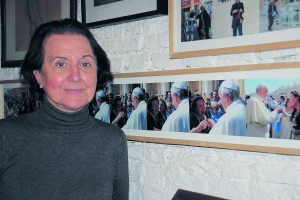
Our group visits a local sculptor, Norma d’Ippolito, at her home. On her studio wall is a photo of Norma presenting a sculpture to Pope Francis soon after he became Pope.
Like others we meet during our week in Buenos Aires, she is thrilled to know that the head of the Roman Catholic Church is a porteno (Spanish for people of Buenos Aires — Argentina’s
largest port).
Judith Doyle is a freelance journalist and travel writer from Wellington.
On the ‘Pope tour’ in Francisco’s home town

Featured News
- All
- Catholic Events
- Catholic News
- Featured Catholic News
- International Catholic News
- New Zealand Catholic Opinion
- News
- Reviews New Zealand Catholic
More
Seven stained glass windows brighten Taranaki chapel
Amazing patterns of light now flood through the Mary Phelan Chapel at Sacred Heart Girls’ College in New Plymouth after seven stained glass windows were
installed early this year.
The chapel windows were...