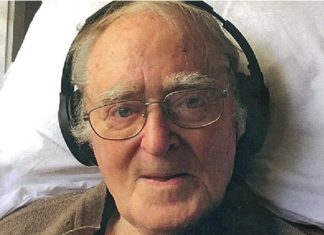





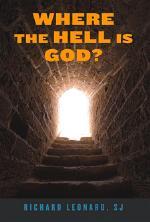
AUCKLAND A short, succinct, highly personal book about suffering and God, written by an Australian Jesuit, has been rocketing off bookshelves throughout the world. Where the Hell is God, by Fr Richard Leonard, SJ, has sold 28,000 copies in Australia and is now in its third printing, with a fourth planned.
The 88-page book, published by Hidden Spring-Paulist Press, is selling very well in the United States, the United Kingdom, Ireland and Malta, with contracts issued for Dutch, Chinese and Vietnamese translations. As of mid-May, negotiations were also under way for French and Spanish translations.
Fr Leonard, who is director of the Australian Catholic Film and Television Office, said that although the book is informed by theology, Scripture studies and Catholic tradition, it is not an academic book.
There are plenty of those; there is a library written on this stuff, Fr Leonard told NZ Catholic.
Rather, it is out of his own experience and is therefore pastoral, said the 47-year-old, who was in Auckland in late May for an independent schools conference and a workshop with teachers from Catholic schools.
Fr Leonards 28-year-old sister Tracey was left a quadriplegic after a car crash in 1988. A qualified nurse and engaged to be married, she had previously worked with Mother Teresa in India and, at the time of the accident, was working at a health centre for aboriginal people in northern Australia.
Traceys injuries have left her needing to be washed, clothed, toileted and fed each day since then.
Fr Leonards mother, a daily Massgoer, who had herself been widowed at age 32 and left having to raise three small children, upon seeing her daughters injuries asked the question that became the title for the book: Where the hell is God?
But the statements some people made to her, and wrote to Fr Leonard, deriving from popular piety, were appalling, depicting a tyrannical, aloof God.
Examples were: God must have had a bigger intention. He only sends the biggest crosses to those who can bear them. Its just Gods will and you have to accept it.
Other contributions speculated on Gods punishment for some misdeed or the reward for forbearance in the next life.
His mother, wanted to scream at these people, Fr Leonard said, adding that he has known people who have walked away from their faith over this stuff.
Fr Leonard wrote that if he thought God was directly and immediately responsible for his sisters accident, then he would have had to leave the priesthood, the Jesuits and the Church.
How he has held onto his faith is by not settling for pious clichés about suffering and loss.
I can’t do that anymore. It didn’t work. So I can’t give them out.
But the Church isn’t definitive on this matter, because we can’t be, Fr Leonard said.
If other people come to different conclusions to me, I say explicitly in the book, I’m really happy for them, because I believe everybody has to come to their own peace in these matters.
I’m not that arrogant to believe that my theological paradigm is the only one available.
But the tyrannical God in which some people seem to believe, is a fearful, neat solution to the deep pain within some peoples lives.
In the book Fr Leonard proposes seven steps to spiritual sanity.
1. God does not directly send pain, suffering and disease. (There is an important distinction between God permitting and God enacting.)
2. God does not send us accidents to teach us things, although we can learn from them.
3. God does not will earthquakes, floods, droughts or other natural disasters. Prayer asks God to change us to change the world.
4. Gods will is more in the big picture than in the small.
5. Jesus did not come to die, but God used his death to announce the end to death.
6. God has created a world that is less than perfect and in which suffering, disease and pain are realities; otherwise it would be heaven.
7. God does not kill us off.
Fr Leonard said St Paul was onto something in Romans when he wrote that the world is groaning in one great act of giving birth.
Because the world does seem to be unstable and developing and growing and groaning, just as human beings are groaning, growing and developing.
Fr Leonard turns to the ancient Christian tradition of a God who is completely present to us, who is unchanging, who is love and gives life (cf 1 John 1:5).
Spiritual sanity rests in seeing that every moment of every day, God does what he did on Good Friday, not to allow evil, death and destruction to have the last word, but to ennoble humanity with an extraordinary resilience to enable us to make the most of even the worst situations and let light and life have the last word.
Easter Sunday is Gods response to Good Friday: life out of death.
He paints a picture of God as our best friend, who is ever present with us, who cries with us when tragedy strikes.
Fr Leonard has been swamped with letters from people responding to his book, some of whom write that they havent spoken of their pain and anger for 50 or 60 years.
In one case, a 90-year-old woman wrote, having lost a child some 70 years ago.
Her parish priest then had told her that her child was so pure that God would not allow the child to be tainted by the world, so took it back.
She wrote that she hadnt realised how angry she had been at that until she read Fr Leonard discussing how spurious and theologically deficient is the notion that God needs another little angel in heaven a platitude often delivered when a baby or child dies.
Having read the book, this woman found herself being freed of an anger she had held onto to 70 years.
Some correspondents have taken issue with some of Fr Leonards ideas, notably his examination of praying for rain.
We are so used to casting God as a meteorologist, but he is just such a bad one. I dont mean that facetiously, but there is a modicum of seriousness about it.
He critiques a gaming machine image of prayer, whereby if we put enough coins in a slot, we will get the three lemons we want.
What an image of prayer.
My problem [with praying for rain] is not when it rains but when it doesn't. What does it mean? God doesn't care or God can't act or God doesn't know?
But the sort of God prayed to in this image is, in fact, closer to the God Zeus, from ancient Greek mythology, who not only controlled the weather, but who was notoriously petulant and who had to be appeased.
This is not the God and Father of Jesus Christ, our Lord.
Fr Leonard said the organised religions offer a structure of meaning, so have to talk about suffering and loss.
The moment that is most meaningless to people is when they feel most bereft, when evil hits their life in any of its forms, they are going to turn and say, Why did God do this, why did God even permit this?
Religion has to provide intelligent answers to such people, even if those answers are not the final or the only word.
But, boy, I think we have got to have something coherent to say. We have got to have a go because its one way that we honour people’s search for God in the face of their experience of suffering and pain.”