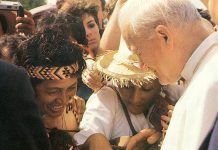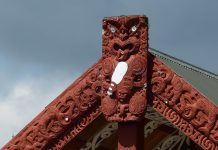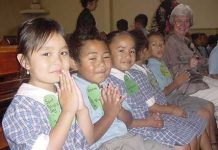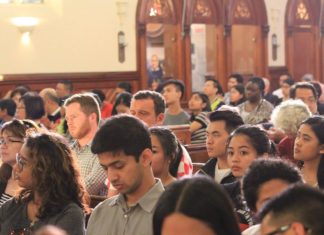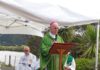





LOWER HUTT A karanga, or Maori call of welcome, is being used during the Eucharistic Prayer at Masses at Sts Peter and Paul parish, Lower Hutt, to acknowledge the Real Presence of Jesus. After 18 months of negotiation and preparation, according to Wellington archdiocesan newspaper Wel-com, the karanga was introduced to coincide with Maori Language Week in July.
It takes the place of the traditional ringing of the bells at the elevations of the bread and chalice at the Consecration and welcomes Christ under the forms of bread and wine. The priest and congregation have their own replies.
The move follows recommendations from an archdiocesan synod that Maori culture play a significant role in Masses in the archdiocese by 2011.
NZ Catholic believes the karanga is used at Sunday Masses and on major feast days in Lower Hutt.
Archdiocesan pastoral liturgy support co-ordinator Fr John Greally said there is no intention to mandate the use of karanga at all Masses in the archdiocese. But its use and general inculturation in the liturgy take their direction from the major documents of Vatican II, centred on the call to holiness.
Fr Greally cited Varietates Legitimae, issued by the Congregation for Divine Worship and the Discipline of the Sacraments in 1994, which refers to liturgical inculturation, making use of elements borrowed from the social and religious rites of peoples.
Because she is catholic . . . the Church is called to gather all peoples, to speak all languages, to penetrate all cultures, the document said.
Fr Greally also referred to Pope John Paul IIs apostolic letter Vicesimus Quintis Annus, which said trying to make the liturgy take root in different cultures is an important task for liturgical renewal.
National Liturgy Office director Fr Trevor Murray told NZ Catholic that the inculturation of the Church’s liturgy is essential if it is to be life-giving to, and have relevance for, those who celebrate it.
But Fr Murray said the official Maori translation of the third edition of the Roman Missal will not include a karanga.
The Maori translation was based on a translation of the Missal faithful to the standard version and principles set out in Vatican documents.
Obviously, the karanga is not in the [standard] Missal [so] it is not in the Maori translation of the same, he said.
Fr Murray said the introduction of cultural elements into the liturgy requires a dialogue between Church tradition and the genius of the culture of a particular people that is honest, intelligent and informed.
This . . . dialogue requires experts in both the liturgy of the Church and the culture of a people, listening respectfully to one another. Nothing should be attempted in respect of the liturgy and a particular culture unless such a dialogue occurs, he said.