The post NZ bishops and congregational leaders make commitments in response to royal commission appeared first on NZ Catholic Newspaper.
]]>The statement is signed by Father Thomas Rouse, SSC, president of the Congregational Leaders Conference of Aotearoa New Zealand, and Cardinal John Dew, president of the New Zealand Catholic Bishops Conference, on behalf of their respective members.
The set of 10 commitments – along with others previously made – will become part of what the Church calls the “Tautoko Roadmap” for the path the Church is taking in response to the Royal Commission and the wishes of abuse survivors.
Te Rōpū Tautoko is the group the Church formed to coordinate Catholic engagement with the Royal Commission, following the Government in 2018 accepting Church requests for abuse in faith-based organisations to be included in the terms of reference, which were originally limited to abuse in state care.
The full statement is:
In February 2018 the Government established the Royal Commission of Inquiry on Abuse in Care for State and Faith-based institutions. Church leaders had asked to be part of the inquiry, recognising our need to acknowledge our history, and the need to learn lessons for today and the future by examining, understanding, acknowledging, and addressing the abuse that had occurred in the Church and the Church’s failures in responding. In October, a milestone was reached when the Commissioners concluded the public hearing phase of their work. Their final report is due in June this year, with one or more interim reports expected before then.
The Catholic Church is grateful for the abuse survivors who have shared their stories with the Royal Commission. Their experiences, and the feedback we have received on our processes from a large number of survivors and some survivor groups, have led to us review and improve our Church processes to support survivors and also to create a safer Church.
Much has been done, but we are still learning as we seek to continually improve. However, we cannot just wait while the Government considers how to implement the Royal Commission’s recommendations. We have heard and listened to survivors telling us they want us to change now. The current Synod process begun by Pope Francis in 2021 has told us the Catholic community wants us to do much better in responding to survivors and ensuring a safe Church.
We acknowledge that the abuse of people in the care of the Church is real and the failures of Church leaders in responding to reports are real. The impacts of these are present today; for survivors, their whānau, for faith communities, and for society. This is not just an exercise in looking backwards. We look forwards. We will continue to improve safeguarding in all aspects of church life. There is not, and will not be, any tolerance for abuse in the Church.
There are immediate things we as Church leaders can do to achieve this. Pope Francis said in 2018 that everyone in the Church should feel involved in the Church and the societal change that is needed. Some of the change required is quite technical, but at its heart the change involves a change in approach – a different attitude, a new culture. Some things will take longer, especially those that involve others getting on board. This work involves all of us. We commit to a Roadmap of action, knowing that we do not necessarily know where this road will lead.
The following are a number of items we have recently discussed and committed to, in the light of what we have learned from the Royal Commission’s hearings. We would like to share these with you, so that you know what we are doing.
COMMITMENTS MADE
The bishops and congregational leaders of the Catholic Church in Aotearoa New Zealand have agreed to:
(a) Support the option of an independent entity for survivors to report abuse and gain redress where they wish to do so.
(b) Support the establishment of an independent entity that reviews and monitors the Church’s redress processes for those survivors who take this option. We also support an independent process that reviews and monitors safeguarding systems of our Church institutions.
(c) Expedite or establish internal and external review processes for the current Catholic Church redress and safeguarding systems.
(d) Work towards consistency in redress responses between Catholic Church entities.
(e) Support the proposal for mandatory reporting of reports of abuse in care settings for children, young people, and vulnerable people; acknowledging that significant work needs to be undertaken as to how, when and to whom reports are made. We note that exemptions will need to be made for some settings to protect legal, confessional, and therapeutic privilege.
(f) Request that as part of the special character of schools, school boards notify proprietors of claims of serious disciplinary matters of inappropriate behaviour (whether a student, volunteer, employee, or teacher), through a regular reporting mechanism.
(g) Request that proprietors of schools undertake an audit, with school boards, of buildings, prizes, honorifics, and the like named after bishops, clergy, religious or lay people connected to the Catholic community and photos/portraits on display at the school.
(h) Develop policies to assist schools when naming buildings, prizes or other items after bishops, clergy and/or religious, and displaying photos/portraits and honorifics (such as honour boards).
(i) Continue to audit, with parishes; clubs, other Church organisations, buildings, awards, honorifics and similar named after bishops, clergy, religious or lay people connected to the Catholic community and photos/portraits on display.
(j) Request the National Safeguarding and Professional Standards Committee (NSPSC) to consider, and report back in six months, on:
(i) how to offer further survivor care and a support-focused approach to reports of abuse.
(ii) introducing more consistency and accountability for the outcomes of reports of abuse.
(iii) the resource and other implications if the National Office for Professional Standards’ (NOPS) jurisdiction were extended beyond sexual abuse by clergy and religious.
(iv) establishment of a role for actively monitoring safety plans or other outcomes of any disciplinary actions.
(v) audits of disciplinary outcomes and safety plans of living respondents.
These commitments, along with others already made, become part of what is called the Tautoko Roadmap. Te Rōpū Tautoko is the group we formed to coordinate Catholic engagement with the Commission. Members of the group are managing this Roadmap until they hand it on to others later this year, once the Royal Commission’s work is completed. We have asked our National Safeguarding and Professional Standards Committee to consider these and other matters and implement them into practice and/or planning. The actions required are not delegated to one group or even some groups. Some actions are for Church leaders, but real lasting change requires everyone within the Church to commit to safeguarding and support of survivors.
Our continued hope is that the work of the Royal Commission will help not only Church leaders but all of us in the community confront the issues of abuse. As a Church, we remain committed to break the cycle of abuse so that all people may participate in churches and communities that are safe and which nourish them to grow to their potential.
It is our expectation and requirement that every person working in the Church, paid or voluntary, will adhere to the policies and procedures that have been established to foster a culture of safeguarding and support of survivors.
The Church takes all reports of abuse seriously. Reports of abuse made about church personnel in New Zealand can be referred to the Church’s National Office for Professional Standards. Alternately, people making reports of abuse may choose to go directly to the Police, and the Church will support anyone who requires assistance to do this.
The Royal Commission, media reports, and people disclosing abuse can all be a catalyst for other people to come forward. We encourage anyone who has been abused in the care of the Church to contact us and for your experience to be heard and addressed. We are committed to responding and supporting you, to the extent that you wish to engage with the Church.
Finally, our prayers are that all who have suffered from abuse find peace and hope, and, that all people in our care are safe and free from harm. Please also pray for us, as Church leaders, as we all continue on this road.
Photo: A screenshot of Cardinal John Dew speaking at the Royal Commission on Abuse in Care last year.
The post NZ bishops and congregational leaders make commitments in response to royal commission appeared first on NZ Catholic Newspaper.
]]>The post New Catholic Māori group works with NZ bishops appeared first on NZ Catholic Newspaper.
]]>The bishops met from October 31 to November 3 for a regular meeting of the NZ Catholic Bishops Conference-Te Huinga o ngā Pīhopa Katorika o Aotearoa.
Cardinal John Dew, Archbishop of Wellington and NZCBC President, said that Te Rōpū Māori (The Māori Group) was recently formed to sit alongside the NZCBC in discussing and giving advice on matters of particular pastoral interest to Katorika Māori (Māori Catholics).
“The aim is that they provide a well-grounded voice for Katorika Māori and work in partnership with the NZCBC, embodying a more synodal way for the Church,” Cardinal Dew said.
Te Rōpū Māori’s inaugural delegates are from each of the six dioceses and include wahine and tane members: Manuel Beazley (Auckland), Father Gerard Paterson (Hamilton), Korty Wilson (Palmerston North), Deacon Danny Karatea-Goddard (Wellington), Kathy Simmons (Christchurch) and Sharne Parkinson (Dunedin).
Cardinal Dew said that Te Rōpū Māori was in its early stages. Its members would attend a scheduled meeting of the long-established Te Rūnanga o te Hāhi Katorika ki Aotearoa advisory group in February, to reflect on refinements for the future.
The bishops had a full agenda over their four-day meeting. Present were Cardinal Dew (Archbishop of Wellington, NZCBC president, and apostolic administrator of Palmerston North Diocese); Bishop Stephen Lowe (Bishop of Auckland, apostolic administrator of Hamilton Diocese, NZCBC secretary/vice president); Archbishop Paul Martin, SM (Coadjutor Archbishop of Wellington); Bishop of Dunedin Bishop Michael Dooley; Bishop of Christchurch Bishop Michael Gielen; Father Leonard Danvers (local administrator of Hamilton Diocese); and Father Craig Butler (local administrator of Palmerston North Diocese).
Archbishop Novatus Rugambwa (Apostolic Nuncio to New Zealand) and Father Giosuè Busti (deputy head of mission, Apostolic Nunciature) attended the opening session as distinguished guests.
The bishops expressed gratitude to Archbishop Rugambwa for his work across what is the largest geographic area for a nunciature in the world-wide Church – many of the South Pacific island states as well as Aotearoa New Zealand. Archbishop Rugambwa, who recently visited Rome, shared the greetings and blessings of the Holy Father with the New Zealand bishops and the people under their pastoral care. The bishops stressed the importance of appointments of bishops to the dioceses of Palmerston North and Hamilton, which are currently without a bishop.
During their four-day meeting, conference members reflected on the latest Royal Commission on Abuse in Care hearing, and will hold a meeting next month to discuss matters that have arisen during the royal commission, including efforts to foster a survivor-centred response.
The bishops discussed, and very much look forward to, World Youth Day in Lisbon, Portugal 2023; the Synod of Bishops meetings in 2023 and 2024; and the Holy Year Jubilee 2025, a special year of grace for the Catholic Church, which will be the second for Pope Francis.
The meeting progressed plans for the assembly for diocesan priests to be held in the latter half of next year, with the theme Amorangi Tū Ake! Journeying together in our renewal of our Lord’s call. A firm date will be decided depending on the availability of speakers.
Visitors during the four days included Mena Antonio, chief executive of Caritas Aotearoa New Zealand, Dr Kevin Shore, CEO, NZ Catholic Education Office, Robert Blucher, the new CEO of Te Kupenga-Catholic Leadership Institute, Fr Mathew Vadakkevettuvazhiyil, rector, Holy Cross Seminary, Catherine Fyfe, chair, Te Rōpū Tautoko, (the group that coordinates Church engagement with the Royal Commission on Abuse in Care), and members of the Latin Mass Society.
The post New Catholic Māori group works with NZ bishops appeared first on NZ Catholic Newspaper.
]]>The post Catholic leaders appear before Royal Commission appeared first on NZ Catholic Newspaper.
]]>According to a Te Rōpū Tautoko update that was emailed to parishioners in at least one Auckland parish, nine witnesses were called to give evidence. The first session of the day concerned Catholic education, with the context of St Patrick’s College, Silverstream, being a focus. The second part of the day consisted of two sessions, involving two panels of leaders from the Catholic community.
The day started with an opening statement from Sally McKechnie, counsel for Te Rōpū Tautoko (which co-ordinates and manages engagement between the royal commission and the Catholic Church in Aotearoa, represented by the Catholic bishops and congregational leaders of Aotearoa New Zealand).
Ms McKechnie started by acknowledging the survivors who have suffered harm and abuse while in the care of Catholic institutions. Some of this harm took place in Catholic schools, including St Patrick’s College, Silverstream. She emphasised that harm to people in the care of Catholic institutions and entities is unacceptable and indefensible.
After speaking about Catholic education in this country and about St Patrick’s College, Silverstream, within that context, Ms McKechnie stated that this school is only one example of a Catholic school, and therefore does not, and cannot, in itself, represent all state-integrated Catholic schools in New Zealand.
The Te Rōpū Tautoko update stated that Ms McKechnie went on to outline the reports of abuse relating to alleged historical abuse at the college from the 1950s to the 1980s, and more contemporary incidents requiring an employment disciplinary response, from 2005 to the present.
Society of Mary
The update went on to state that Fr Tim Duckworth, SM, provincial of the Society of Mary, gave evidence from Rome, via an audio-visual link. His evidence largely focused on the prevention of, and responses to, reports of abuse relating to St Patrick’s College, Silverstream. He acknowledged that the response to some of the reports of abuse, particularly to those reports that were made in the 1970s and 1980s, lacked compassion and insight. He commended the courage of those boys and men who spoke up and reported abuse.
The Te Rōpū Tautoko update stated that Fr Duckworth gave his view of why some responses by the Society of Mary to reports of abuse made contemporaneous to the offending, were inadequate and did not put the victims first. He acknowledged that the Society has responded inadequately to those complaints, and that that is not how it would be done now.
He also answered several questions from the commissioners about the teachings of the Church regarding sexuality and sexual abuse from the 1930s to the 1980s; the development of policies and knowledge in responding to and preventing abuse from occurring in the college; how the Society of Mary sees the application of mandatory reporting in the confessional space; the representation of Māori, Pacifika and other ethnicities in leadership roles within the Society of Mary; and the Society of Mary’s responsibility for the moral, ethical and spiritual values of the kura (school).
A panel consisting of leaders from St Patrick’s College, Silverstream, were the next to give evidence. The panel was made up of Dr Clare Couch (chairperson of the Board of Proprietors), Mr Sean Mahony (chairperson of the School Board), and Mr Rob Ferreira (Rector/Tumuaki).
The panel’s evidence discussed the school today, and canvassed a number of themes, including how, in practice, the School Board as a Crown entity, gives effect to Te Tiriti o Waitangi, and how the college implements active protection and partnership in accordance with Te Tiriti in the context of preventing harm. The panel gave evidence about the college’s involvement in, and responsibility for, allegations of abuse by Society of Mary members that occurred prior to the college’s integration, how reports of abuse are responded to by the college today, the barriers to disclosing abuse at the college and current safeguarding practices, and the record-keeping practices of the college. The panel’s evidence addressed requests for removal of portraits at the college, and how both the Board of Proprietors and the School Board deals with such requests.
The panel answered a number of questions from the commissioners about the college’s current relationship with its history of abuse and historical redress processes, how the college creates safe spaces for students of different cultures, backgrounds and ethnicities, and changes that have been made to recognise students of the rainbow community at the college, the Te Rōpū Tautoko update added.
Later in the hearing, Ms McKechnie summarised how the dioceses and congregations of the Catholic Church in Aotearoa have engaged with the royal commission to date, noting that the scale of this engagement demonstrates their commitment to this process of change.
She outlined the changes that have been made by Catholic entities since the mid-1990s in the prevention of abuse, response to abuse, and safeguarding spaces.
Finally, she also set out that, over the last four years, Te Rōpū Tautoko has been compiling statistical information on records of reports of abuse across Catholic entities, and that has been published.
Bishops
According to the Te Rōpū Tautoko update, Bishop Patrick Dunn (Bishop Emeritus of Auckland) and Bishop Stephen Lowe (Bishop of Auckland and Apostolic Administrator of the Diocese of Hamilton) were the next to give evidence.
Bishop Dunn gave evidence in relation to several reports of abuse against Sateki Raass, a priest of the Diocese of Tonga, who was granted permission to minister in Auckland Diocese in 2006. (In 2019, Raass pleaded guilty to a charge of indecent communication with a person under 16, and was sentenced to 100 hours’ community service. He left the priesthood.) Bishop Dunn reflected on responses to these reports of abuse, engagement with distinct Catholic cultures and communities, and the Dispensation Rescript that formalises an individual’s removal from the clerical state, often called laicisation. A focus of the commissioner’s questions was on the support given to the respondents of abuse, in this case Sateki Raass, rather than those reporting abuse, in this case victims of a criminal offence and family. A specific focus was on a process to assist Mr Raass gain employment, following a request from a principal of a Catholic school, after Mr Raass had left the priesthood, and after he had served his community service sentence.
Bishop Lowe briefly gave evidence about the process for responding to reports of abuse today, including A Path to Healing, and the referral of complaints to the National Office of Professional Standards. He also discussed current safeguarding policies, programmes and protocols.
The Te Rōpū Tautoko update added that the last panel to give evidence for the day consisted of Cardinal John Dew (Archbishop of Wellington), Sister Sue France, RSM, (congregational leader, Nga Whaea Atawhai O Aotearoa Sisters of Mercy New Zealand), and Dr Paul Flanagan (member of the National Safeguarding and Professional Standards Committee).
Cardinal Dew began his evidence by acknowledging the abuse experienced by survivors in Catholic entities, and the failings of Catholic leaders in responding to and preventing abuse, the update stated. The cardinal emphasised that Catholic leaders within dioceses and congregations are working together to determine how abuse came about, and what is needed to be done to prevent it.
Sr Sue apologised for the harm to children in the care of Sisters of Mercy institutions, and explained that the congregation has implemented change over time, and that she wants to discuss what more needs to be done.
Dr Flanagan acknowledged the abuse experienced by survivors, and the shameful fact that people in authority, who may have known about abuse, did not act in the victims’ favour. Dr Flanagan gave evidence about the role of the National Safeguarding Professional Standards Committee and its relationship with NOPS. He also outlined the key areas of safeguarding and preventative practices, and the continuing work undertaken around safeguarding, so that it is a transparent, accountable and robust process.
The panel’s evidence included discussion about A Path to Healing and the Complaints Assessment Committee processes, and also touched on the uniqueness of the Church structure in Aotearoa New Zealand, in comparison to the rest of the world, and how structural changes are being made in the universal Church.
The Te Rōpū Tautoko update stated that a part of the questioning by commissioners related to questions of mandatory reporting and the seal of confession. Cardinal Dew reported that, in all his years as a priest, no one had disclosed their abuse of another person during confession, reminding those watching that Fr Tim Duckworth had made a similar statement in the morning. The update noted that, at times, there were obvious tensions when survivors were responding to statements by witnesses. This included a walk-out when Cardinal Dew’s comments about disclosures in the confessional were interpreted as him never receiving a disclosure of abuse ever.
Before the Catholic institutions hearing, the Survivors Network of those Abused by Priests (SNAP) in Aotearoa New Zealand reiterated its previous calls for Catholic Church leaders to authorise an audit of the Church’s National Office for Professional Standards. Such an audit should be done by an external body, SNAP stated. They have written to Pope Francis on such matters.
On the final day of the hearing, SNAP spokesman Dr Christopher Longhurst reportedly told commissioners that abusers should not get second chances. “Survivors get no second chances. They do not get a second chance at childhood, they cannot request a second chance to a life free of abuse,” he said.
The post Catholic leaders appear before Royal Commission appeared first on NZ Catholic Newspaper.
]]>The post Wellington Archdiocese marks priestly jubilees appeared first on NZ Catholic Newspaper.
]]>According to a note on Cardinal John Dew’s facebook page, the jubilarians this year were Frs John Walls, SM (50 years), Roderick Milne, SM (60 years), David Arms, SSC (60 years), Brian Wysocki, SM (65 years), Alan Roberts (50 years), Ron Bennett (50 years), Julian Wagg (50 years), and Tom O ‘Brien (60 years).
“Between them, they have served as priests for 445 years, an amazing record of service,” Cardinal Dew wrote.
“We thank them for their contribution to the life of the Church and the people of the archdiocese and the country. May they enjoy good health and many blessings in the years to come,” he added.
The jubilee Mass was celebrated at St Patrick’s church, Kilbirnie, with Fr Ron Bennett the principal celebrant.
After the jubilee Mass, the clergy continued the celebration with a buffet lunch and speeches.
The post Wellington Archdiocese marks priestly jubilees appeared first on NZ Catholic Newspaper.
]]>The post Cardinal John Dew reflects on the Plenary Council in Sydney appeared first on NZ Catholic Newspaper.
]]>This session of the Plenary Council began with Mass at the Saint Mary MacKillop Centre in North Sydney. This was also Aboriginal and Torres Strait Islanders Sunday, but it was a good day to ask for the prayers of St Mary of the Cross MacKillop. It was profound, and reminded me of the time in 2007 when we brought the World Youth Day Cross over from New Zealand to begin it’s year-long tour of Australia, that tour which was dedicated to the then-Blessed Mary MacKillop.
All consultative voting was completed electronically with immediate results, but when it came to deliberative voting these votes were recorded on paper and then physically counted. Deliberative voting was done by bishops only, which is a canonical requirement of a Plenary Council. However, it is true to say that, as the week wore on, the bishops were taking more notice, and listening more, to what the assembly had voted.
Mass on Monday in St Mary’s Cathedral was celebrated by the Ukrainian bishop and other Eastern Rite Catholic Bishops. It was a wonderful sign of support for people of Ukraine, and a very good way for many people to experience an Eastern Rite Liturgy. The fact that this was arranged was seen as a generous and appreciated gesture by the members of the Plenary Council.
At the first gathering at North Sydney (Mary MacKillop’s Chapel) on the Sunday evening, the first action was the Aboriginal Smoking ceremony and acknowledgement of the land. At the beginning of every day, someone acknowledged the land and the Aboriginal ancestors, and reminded everyone that we were gathered on sacred land. This acknowledgement of land and the original owners is now regular practice and is very much appreciated.
The first council session on ”Reconciliation, Healing Wounds, Receiving Gifts” was about relationships with Aboriginals and Torres Strait Islanders.
The session on “Choosing repentance, Seeking Healing” was preceded by a time of prayer, a very profound time as we all joined in The Prayer of Lament. Prayer was interlaced throughout the whole session, which meant that this was not just a topic to be debated and voted on, but one where every heart was touched.
The whole session expressed profound sorrow that children, young people and vulnerable adults have been abused by clergy, religious and lay workers of the Catholic Church, and that leaders have failed to act sufficiently to prevent or respond to abuse.
Each time the groups went into “spiritual conversations” they were asked to reflect on the question; “How do these motions and amendments help us to become a more missionary and Christ-centered Church?
The idea of having a Plenary Council was first spoken of about ten years ago, and the Australian bishops knew that something had to be done, and the Church needed to change in some way. They had worked for a long time preparing for the Plenary Council and consulted many thousands of people all over Australia. I have been very impressed at how they have adapted the processes they already had in place when Pope Francis asked the world to prepare for a Synod on Synodality. The prayerful discernment and listening processes have become part of the way this council has operated. As one of the invited observers, I have been very impressed at the way every day has had a Scripture passage to be the focus of the day, and every session has included “spiritual conversations”. This brought about careful and respectful listening before votes took place. An overall theme has been “Listen to what the Spirit is saying…”. In my mind, there is no doubt that is what the 260 members of the council have been doing, as well as the many thousands of people who made submissions.
During the week, “pereti” – theological advisers – have been available to speak with any members who wished to speak with them to clarify issues or gain deeper insights into what has been proposed. To me, this was a thoughtful and inspired gesture.
Wednesday brought a halt to the Council process when there was real dissatisfaction with the deliberative vote on the “Role and participation of women in the Church”. This was about looking for new ways for women to participate in ministries and roles that are stable, publicly recognised and resourced. In the deliberative vote by the bishops, that did not pass. There was immediate disappointment for women and men, frustration was expressed, and the steering committee immediately acknowledged that the programme could not go ahead as planned with this dissatisfaction and anger being acknowledged. After some time, people agreed to go back into their groups and to enter into “Spiritual Conversations”. This was an acknowledgement that they could not move on “as normal”, and as if nothing had happened. Needless to say, there was a lot of energy in the conversations, but I believe that this “discernment” enabled people to move ahead. The bishops decided to meet during the lunch break to discuss the voting process, which had become a problem. There were many opportunities for participants to talk together and to feed back how they were feeling. I thought it was a day with great respect, and think that this has been an important day for the life of the Australian Church.
While Wednesday was a difficult day, it was also one of being led by the Spirit. Instead of moving on quickly in order to get through a set agenda, the Steering Committee changed the whole process and gave time for groups to meet and talk, to listen reflectively, and to search for a way forward. For me this was a sign of synodality at work. The People of God had expressed discontent, they needed to be heard, and the Steering Committee ensured that this happened.
The eight topics for voting came from the submissions sent in over the last few years, and much work had to be done to synthesise all the submissions in order to decide on the eight topics. They were:
1.Reconciliation: Healing Wounds, Receiving Gifts
(Focusing on relationships with Aboriginal and Torres Strait Islanders)
2.Choosing Repentance – Seeking Healing
(Focusing on damage of sexual, emotional and physical abuse by clergy and religious – and moving forward)
3.Called by Christ – Sent Forth as Missionary Disciples
4.Witnessing to the Equal Dignity of Women and Men
5.Communion in Grace; Sacrament to the World
6.Formation in Leadership for Mission and Ministry
7.At the Service of Communion, Participation, and Mission: Governance
8.Integral Ecology and Conversion for the Sake of our Common Home
There were several paragraphs written on each of the above topics, provided in the material made available to the members. Information was also available on-line. These paragraphs were spiritual and theological material on the topic, and had already been accepted at the first Session of the Plenary Council in October, 2021. As well as this material, a different theological adviser would have a brief introduction to the topic. All were excellent and informative inputs in preparation for the “spiritual conversations” which followed – these were prayerful discernment processes before the voting on the topics took place.
Is the group “consoled” or does it have “some disquiet?” This was a question asked many times over the days, and stood out for me as a sign that the discernment process that Pope Francis has invited us to engage in is being embraced in the life of the Church. I believe the Pope would be very pleased to know that the deep, prayerful, respectful listening is truly happening, and even I would say is already bearing fruit.
The interest in synodality is high, and I think people see that it gives great hope to the Church, in the sense that it is a way to enable all the People of God to have a voice. One of the proposals voted on was that a working group would be established to develop a Roundtable structure to foster, assess, and report periodically on the development of synodal leadership. This was accepted, and for me it was a sign of synodality already in action.
For me this has been a very interesting and informative time. I have been very impressed with the way the organisers made adjustments to the processes in order to introduce prayerful discernment on each of the topics. The council members consisted of a very wide cross section of the Church in Australia, with a deep concern for the future for the Church, and a genuine desire to create and build an inclusive Church, open to all, giving hope to all, and especially to those who struggle in different ways.
- Photo: People participate in the Second Assembly of the Plenary Council of the Australian Catholic Church in Sydney July 5, 2022. (CNS photo/Fiona Basile)
The post Cardinal John Dew reflects on the Plenary Council in Sydney appeared first on NZ Catholic Newspaper.
]]>The post National hui on synodality held in Wellington appeared first on NZ Catholic Newspaper.
]]>Representatives of dioceses, parishes, schools, priests and religious orders, as well as ecumenical and interfaith attendees, were at the hui, at St Catherine’s College in Kilbirnie.
It followed the recent diocesan phase of New Zealand’s part in Synod 2021-23 – the 16th Ordinary General Assembly of the Synod of Bishops in the Catholic Church, launched by Pope Francis in 2021 to hear what ordinary Catholics throughout the world think should be the future direction of the Church.
Hui attendees discerned key threads from the main points of the six recent diocesan synod syntheses to help to create a national synthesis which will work its way to Rome for the Assembly of the Synod of Bishops in October 2023.
Archbishop of Wellington, Cardinal John Dew, president of the New Zealand Catholic Bishops Conference, told the gathering that Pope Francis knew on his papal election in 2013 that radical change was needed in the Church, but he had no checklist or blueprint.
“What he wanted was a Church sensitive to the least breath of the Holy Spirit, a Church that was open to being led by the unpredictability of grace. If we are to be sensitive to the least breath of the Holy Spirit, listening is essential,” said Cardinal Dew.
Many people loved and appreciated the prayerful discernment process that led to the diocesan syntheses, Cardinal Dew said. “Part of what we are doing today is preparing the New Zealand synthesis of all that has come in from the discernment process which everyone was invited to be part of.
“Synodality calls us to listen to all the People of God, even if we think the ideas are whacky, or heretical or far-fetched. It is only in prayerful listening that we hear others and begin a dialogue . . . with the Spirit leading us.”
Hui attendees broke into groups which discussed and highlighted the main points from the diocesan syntheses. The resulting synthesis of the syntheses is being compiled into a national document by the NZCBC. The national and diocesan syntheses will be sent to the general secretariat of the Synod of Bishops in Rome in August as part of the global synod process.
Syntheses from around the world will then serve as the basis for the first edition of the Instrumentum Laboris, which will be refined during a “continental process”. A final version will be used at the Assembly of the Synod of Bishops next year.
The six diocesan syntheses have already been published on the diocesan and NZCBC websites. The national synthesis will also be published when its document is completed.
Each diocese in Aotearoa New Zealand (and around the world) was asked to consult widely about the Church’s direction, with their work being included in the national synthesis.
The post National hui on synodality held in Wellington appeared first on NZ Catholic Newspaper.
]]>The post Suzanne Aubert’s path to sainthood delayed by Vatican ‘no miracle’ decision appeared first on NZ Catholic Newspaper.
]]>The case for a miracle, the details of which remain private to protect the privacy of the person concerned, was put in 2019 to the Congregation for the Causes of Saints, the Vatican agency responsible for studying sainthood nominations. The congregation appointed a medical council to study it.
New Zealand’s Catholic bishops approved the introduction of the Cause of Suzanne Aubert’s sainthood in 1997. A formal diocesan Inquiry was held in 2004, when the available evidence for promoting her as a saint was gathered. The results were sent to Rome and approved for further consideration. Included with this material was Jessie Munro’s biography, “The Story of Suzanne Aubert”. As a result, Suzanne Aubert was given the title “Servant of God”. Subsequent presentation and approval of the relevant material led to Pope Francis declaring her “Venerable” in 2016.
After someone is declared venerable, the Catholic Church requires proof of two miracles before they can be declared a saint. Recognition of a first miracle would have resulted in Pope Francis awarding her the title “Blessed”, the penultimate step on the path to her being declared “Saint”. She continues to be known as Venerable Suzanne Aubert, a woman of outstanding Christian virtue.
Sister Margaret Anne Mills, DOLC, leader of the Sisters of Compassion in Island Bay, Wellington, said that the medical council’s ruling means it is time to consider the future path of the official process towards Meri Hōhepa Suzanne Aubert’s canonisation.
“From my point of view, the miracle is in the life of those concerned in this process. I witness daily the gift we have of asking Meri Hōhepa to intercede for us on our behalf. It is extraordinary. It is tangible,” she said.
“We have much to be grateful for and we are on a journey of faith. I have witnessed the faith and healing of people as they request Meri Hōhepa’s intercession. This will continue.”.
“Meri Hōhepa would say at this moment: ‘It is God’s will.’ She said that ‘when all else fails this is the moment of God’. We need to rest in that moment for a while, before deciding where to go next.”
Suzanne Aubert (1835-1926) founded the Daughters of Our Lady of Compassion (the Sisters of Compassion) in 1892. She was a friend and advocate for Māori, children, the poor and the sick, with the sisters continuing her work to this day. Thousands lined Wellington’s streets for her funeral in 1926, an extraordinary tribute to a woman who dedicated herself to “people of all religions or none.”
Cardinal John Dew, president of the New Zealand Catholic Bishops’ Conference said: “No matter the outcome of the Cause for Beatification, Suzanne Aubert is remembered, through her writings, prayers and sayings and her life of working for those most in need. All of that lives on. There is no doubt that Suzanne, Meri Hōhepa, was a holy woman, she was greatly loved and respected. All she would want is for us all to follow her example and carry on with works of compassion.”
The post Suzanne Aubert’s path to sainthood delayed by Vatican ‘no miracle’ decision appeared first on NZ Catholic Newspaper.
]]>The post Bishop failed to act on abuse complaint appeared first on NZ Catholic Newspaper.
]]>A former Catholic Bishop of Dunedin, Bishop John Kavanagh, failed to act on a complaint of abuse against one priest, but did take action appropriate for the time after a complaint against another priest, an inquiry process has found.
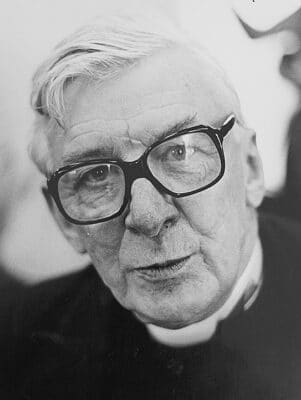
Bishop John Kavanagh
Cardinal John Dew, Metropolitan Archbishop of Aotearoa-New Zealand, requested an inquiry in 2020, after a number of victims of abuse in the Dunedin diocese complained that Bishop Kavanagh – who died in 1985 – had not properly dealt with their complaints of sexual abuse by priests.
At the cardinal’s request, the Church’s complaints body – the National Office for Professional Standards (NOPS) – engaged independent Christchurch senior investigator Micky Earl of the firm Corporate Risks, to conduct an investigation into abuse complaints in the Dunedin diocese while Bishop Kavanagh was in office from 1957 to 1985.
Mr Earl’s report has been considered by the NOPS Complaints Assessment Committee under the Church’s A Path to Healing process, and then by Cardinal Dew as the final arbiter.
“The records showed that seven priests, two brothers and one lay teacher sexually abused children, and in one case an adult, during Bishop Kavanagh’s time as Bishop of Dunedin,” said Cardinal Dew.
“The investigation found that Bishop Kavanagh knew of complaints related to two priests: Father Freek Schokker in about 1963; and Magnus Murray in about 1972. He did not know of the other cases, because complaints were not made until some years after Bishop Kavanagh had died.
“In the case of Murray, the Complaints Assessment Committee found that Murray admitted abuse to Bishop Kavanagh and was sent to Australia for treatment,” said Cardinal Dew. “Because of that admission, and by sending Murray for treatment, Bishop Kavanagh did what he was required to under the Church canon law at the time.
“In the case of Father Schokker, Bishop Kavanagh should have investigated the complaint, but failed to do so,” Cardinal Dew added.
Freek Schokker was a priest from the Netherlands working in the diocese at the time of the complaint. He was accused of abusing two young people. He left New Zealand at some stage after the complaint. He died in the Netherlands in 1993, age 81.
Magnus Murray became a priest in Auckland diocese in 1979 after returning to New Zealand. He was jailed for five years in 2003 after admitting 10 offences against four Dunedin boys from 1958 to1972. Murray was laicised – removed from the priesthood – in 2019, and lives in a rest home.
Cardinal Dew has formally written to the Bishop of Dunedin, Michael Dooley, telling him of the findings. Bishop Dooley has announced that Kavanagh College is to be renamed Trinity College from January 1, 2023.
“I accept that some survivors may not be happy with the decision that Bishop Kavanagh acted properly in respect [of] Magnus Murray. But that was in the context of canon law of the time. We take immediate action on complaints of abuse today. We are committed to a safe environment for all within the Church community. Any form of abuse, misconduct or inappropriate behaviour is not acceptable,” said Cardinal Dew.
Cardinal Dew urges anyone who has any concerns regarding inappropriate behaviour or abuse in a Church setting to contact NOPS or the police: “NOPS operates independently of diocesan and congregation structures. As in the Bishop Kavanagh inquiry, NOPS contracts professional, experienced and independent third-party investigators to conduct investigations on its behalf.”
NOPS can be contacted by free phone on 0800 114 622, or by email at [email protected] The NOPS website, which includes the latest edition of A Path to Healing, is www.safeguarding.catholic.org.nz/
The post Bishop failed to act on abuse complaint appeared first on NZ Catholic Newspaper.
]]>The post Parish farewells Passionist order after nine years appeared first on NZ Catholic Newspaper.
]]>The Passionist Order has left New Zealand now, after finishing nine years of service in Marlborough, and its last priest Fr Jacob Kuman, CP, left on February 28.
Diocesan priest Fr Michael McCabe was installed as parish priest of Our Lady Star of the Sea by Cardinal John Dew at a Mass in Blenheim on Sunday February 27.
Cardinal John thanked the Passionist Order for its generous service in Marlborough.
He said the past nine years had been difficult for the order – earthquakes, COVID, the death of former parish priest Fr John Pearce, CP, and recently parish priest Fr Giltus Mathias, CP, being stuck in Sydney and unable to return to the parish.
“They have been generous to us with their service, and I’m grateful.”
Departing Passionist priest Fr Kuman, who has been assistant parish priest at Our Lady Star of the Sea, said the change was sad.
The Passionist priests have been popular in Marlborough, with their strong personalities making a good impact. Fr Kuman was noted for starting Mass with loud Hallelujahs and exclamations of how beautiful the day is, and the late Fr Pearce made great links with the wider communities and other religious groups. He brought together a public memorial service in the town square after the March 15 mosque killings to show Muslim members of the community that Marlborough welcomed them.
In a letter read out at the installation Mass, the order’s provincial Fr Tom McDonough, CP, said it “was with enormous sadness but great gratitude that the Passionist congregation said goodbye”.
“It has been a joy and a delight to share faith, light, and community together.”
Fr McDonough said that Marlborough was a “vibrant and multicultural parish that filled us with delight”.
Parish spokesman Blair McLean thanked the Passionists for the five priests who had guided the parish over the past nine years.
“There has been some tough and challenging times in our journey.”
He made special tribute to Fr Pat McIndoe, CP, whom Fr McDonough said had come to Marlborough to retire, but had to step up from assistant to be parish priest twice, and ended up being parish priest longer than any other Passionist priest in Marlborough. He is now working in Papua New Guinea at the order’s seminary there.
Mr McLean thanked Fr McDonough for bringing the Passionists to Marlborough.
“They have been part of our tight-knit community. They are part of our history now and their influence will be continually felt.”
Cardinal Dew said that there would be changes at Our Lady Star of the Sea now, with only one priest serving a big parish. The parish stretches from Picton to Kaikoura, with Masses held in Blenheim and Seddon as well.
“But it is where we are now in the archdiocese with a shortage of priests.”
The post Parish farewells Passionist order after nine years appeared first on NZ Catholic Newspaper.
]]>The post PN priests available despite shortage appeared first on NZ Catholic Newspaper.
]]>“We are now in a situation where we don’t have enough priests to service all the Masses we have currently. The parishes are being served – we just can’t celebrate all the Masses we’ve been used to saying,” he told NZ Catholic.
In an earlier pastoral letter, Cardinal John Dew said that there are “staffing challenges” as older priests retire and international priests go back to their home countries. This meant priests are having to look after two or more parishes.
Fr Butler said the situation had been compounded by the pandemic, as other international priests are not allowed to fly into the country yet with border restrictions in place.
“International priests will come and go, but we can’t bring any in at the moment. In our diocese, there are two priests we are looking forward to welcoming in the country once the immigration restrictions are lifted. It will certainly help in some parishes,” he said.
Though priests admittedly have a lot on their plates at the moment, Fr Butler said parishioners should not think they cannot approach their priests if they (parishioners) need help.
“One of the things I have to say to people is, it’s not about being busy. We’re available to people and we’ll do the very best we can to look after people we’re called to serve. It’s as simple as that,” he said.
Fr Butler said he is grateful that a lot of people in the parishes are “generally very active and willing to serve, which is great for the Church”.
He said it wasn’t just a matter of helping out, but being “co-responsible”.
“Our focus as a diocese has been . . . on our parish communities becoming communities of missionary disciples,” Fr Butler said. This was their response to Pope Francis’ call for us to be missionary disciples.
“It’s not new, but I guess it’s a change in emphasis for us . . . away from simply looking after ourselves to reaching out to proclaim the Good News.”
Fr Butler said that the lack of vocations – whether to priesthood or religious life – is something that should be addressed.
He believed that there had been no New Zealand-born priest ordained for Palmerston North diocese for the past 20 years. He also noted the absence of new vocations to religious life.
“The world is an increasingly complex environment,” he said.
He said the Covid situation has made life that bit more challenging.
“I’m not aware of any priests with Covid, but we’ve had a few close contacts, so they had to isolate, just as a precautionary thing,” he said. “So, if a priest is isolating, he can’t celebrate Mass. And in those occasions, then parishes will have a Liturgy of the Word with Holy Communion.”
Fr Butler said not having a bishop is frustrating, but they are lucky to have Cardinal Dew as their administrator.
“He’s a tremendous bishop,” Fr Butler said.
The post PN priests available despite shortage appeared first on NZ Catholic Newspaper.
]]>